
Buyer’s Guide · Guide #11 of 13
Buying Property in Costa Rica as an American: Your Rights and the Steps
Yes, Americans can buy property in Costa Rica, with the same ownership rights as citizens. This guide covers how title works, the maritime zone exception, each step from offer to registration, closing costs and taxes, financing, residency and buying from the US.
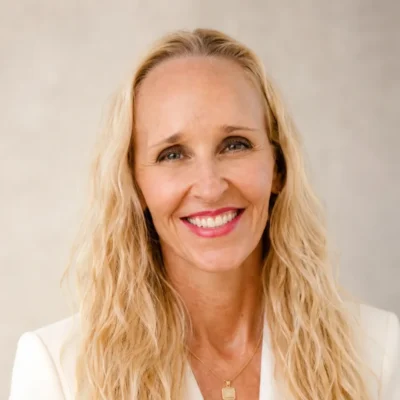
A Note from Melanie
I’ve been selling luxury real estate on Costa Rica’s Guanacaste Gold Coast for a decade. I’ve watched hundreds of foreign buyers navigate this market — some smoothly, some not. The questions in this guide are the ones I answer on almost every first call. My goal here is to give you exactly what I’d tell a close friend who called asking about buying in Costa Rica. No fluff. Just what you need to know.
Key Takeaways
- Americans can own titled property in Costa Rica with the same rights as citizens. No residency, visa or local partner is needed.
- The main exception is the maritime zone: the first 200 meters from the high tide line is held as a government concession, not owned outright.
- Hire your own independent Costa Rican attorney. Only a notary can draft and register the transfer deed.
- Use an escrow agent registered with SUGEF. Your deposit and funds stay in escrow until the deed is signed and recorded.
- Budget about 3.5% to 4.5% of the price for closing costs, plus the 0.25% annual property tax.
Question 01
Can Americans own property in Costa Rica?
Direct Answer
Yes. Article 19 of Costa Rica’s Constitution gives foreigners the same individual rights and duties as Costa Ricans, with limits set by law. A US citizen with a valid passport can buy titled land, a home or a condo, with no residency, visa or local partner needed and no minimum purchase.
Your property is recorded at the Registro Nacional, the national property registry. Some buyers hold title in their own name. Others use a Costa Rican company (an S.A. or S.R.L.) for privacy, estate planning or a simpler future sale. Each option has costs and reporting duties, so decide with your attorney and tax adviser before you sign.
Question 02
Can Americans own beachfront property in Costa Rica?
Direct Answer
Land within 200 meters of the high tide line is in the maritime zone (ZMT). The first 50 meters is public, and in the next 150 meters municipalities grant concessions instead of title. Foreigners with less than five years of legal residency cannot hold a majority interest in a concession.
A concession is a long-term right to use the land for a set term, and it must be renewed. Before you fall in love with a beachfront home, ask whether it is titled or a concession. Our fee simple vs concession guide explains the difference.
Question 03
What are the steps to buy property in Costa Rica?
Direct Answer
Set your budget, choose an experienced local agent, sign a purchase and sale agreement with a deposit in escrow, hire your own attorney, complete due diligence, close through a registered escrow, and have the notary register the deed at the Registro Nacional.
- Set your budget and goals. Decide how you will use the property: full-time home, vacation home, rental or a mix. Add about 3.5% to 4.5% for closing costs, plus ongoing taxes, HOA fees and insurance.
- Choose a local agent. Costa Rica does not license real estate agents the way US states do, so experience and references matter. Work with a brokerage that has recent closings in the communities you are considering. Our guide to choosing a real estate agent in Costa Rica explains what to ask.
- Make an offer. Your agent prepares a purchase and sale agreement that sets the price, the closing date, the contingencies and what furniture or equipment is included. Once signed, buyers usually place a good-faith deposit, often 10%, in escrow.
- Hire your own attorney. Use an independent Costa Rican attorney who works for you, not the seller. Only a notary can draft and register the transfer deed, and most Costa Rican notaries are also attorneys.
- Do your due diligence. Your attorney checks the Registro Nacional record for the owner, liens, mortgages, easements and lawsuits. A surveyor checks that the plano catastrado matches the land. You should also get municipal tax certifications, a water availability letter from AyA or the local ASADA, and the zoning for the lot. Our due diligence guide has the full checklist.
- Use a registered escrow. Escrow agents should be registered with SUGEF, Costa Rica’s financial regulator. Your deposit and the balance of the price sit in escrow until the deed is signed and recorded.
- Close and register. The deed is signed before a notary, the transfer tax and fees are paid, and the notary files the deed at the Registro Nacional. A cash purchase often closes in about 30 days from an accepted offer. Bank financing takes longer.
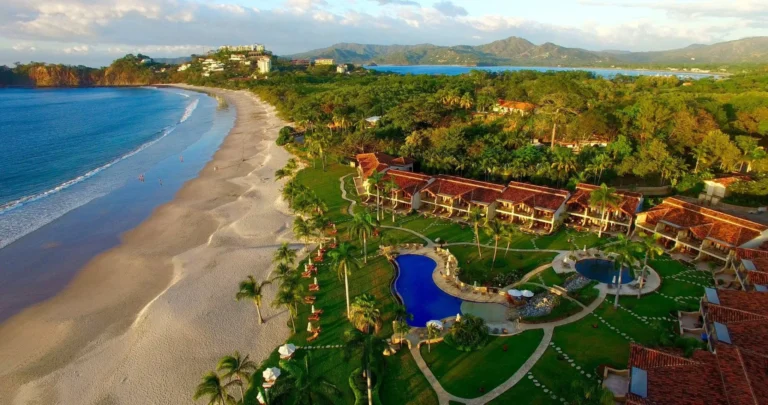
- Set up the property. Transfer the utilities, register with the municipality for property tax, and arrange insurance and, if needed, property management. Our living in Playa Flamingo guide covers daily life once you arrive.
For more detail on each stage, see how to buy real estate in Costa Rica.
Question 04
How much are closing costs and taxes for American buyers?
Direct Answer
Plan for about 3.5% to 4.5% of the price in closing costs, including the 1.5% transfer tax, registry and stamp fees, notary fees and escrow. After closing, the municipal property tax is 0.25% of the registered value each year.
- Transfer tax: 1.5% of the higher of the declared price or the registered fiscal value. It is customarily paid by the buyer, although the contract can split it.
- Registro Nacional fees and stamps: roughly 0.8% of the price.
- Notary fees: about 1% of the price at typical Guanacaste prices, plus 13% VAT, under the notaries’ official minimum tariff.
- Escrow: a flat fee or a small percentage.
- Annual property tax: 0.25% of the registered value. Owners must declare the value to the municipality at least every five years.
- Luxury home tax: the impuesto solidario applies when the value of a home’s construction reaches a threshold set each year. For 2026 the threshold is ₡143 million.
- When you sell: capital gains on property are generally taxed at 15% of the gain, with different rules for property acquired before July 1, 2019.
- US tax reporting: owning property, a Costa Rican company or a local bank account can carry US reporting duties. Talk to your US tax adviser before you buy.
Our closing costs guide has worked examples.
Question 05
How do Americans pay for property in Costa Rica?
Direct Answer
Most Americans buy with cash or with financing from home, such as a home equity loan. Costa Rican banks lend mainly to legal residents, usually with lower loan-to-value ratios and higher rates than in the US.
Seller financing is sometimes possible and should be drafted and registered by your attorney. Our financing guide compares the options.
Question 06
Do I need residency to buy property in Costa Rica?
Direct Answer
No. You can buy and own property as a tourist. Residency is a separate process with its own requirements.
If you plan to apply for investor residency through your purchase, tell your attorney before you choose how to hold title. The rules and the minimum investment have been changing, so check the current position with an immigration attorney. Our Costa Rica relocation guide for Americans covers the move itself.
Question 07
Can I buy property in Costa Rica without being there?
Direct Answer
Yes. Many of our clients buy from the US. We can show properties by video call, your attorney can arrange for you to sign through a power of attorney, and funds move by international wire into escrow.
We still recommend at least one visit before or after closing to meet your attorney and see the property in person.
Question 08
How long does it take to buy property in Costa Rica?
Direct Answer
A cash purchase often closes in about 30 days from an accepted offer. Bank financing or complex due diligence takes longer.
About Flamingo Beach Realty
Flamingo Beach Realty is the #1 luxury real estate brokerage on Costa Rica’s Guanacaste Gold Coast, with 500+ five-star reviews and $900M+ in closed transactions. We serve buyers and sellers across Playa Flamingo, Reserva Conchal, Hacienda Pinilla, Las Catalinas, Peninsula Papagayo, and the surrounding Guanacaste communities.

Ready to start your Costa Rica purchase?
Talk directly with Melanie Engel, principal broker and founder of Flamingo Beach Realty — 500+ five-star reviews, $900M+ in closed transactions across Guanacaste’s Gold Coast.