
Key Takeaways
- Foreigners have the same constitutional property ownership rights as Costa Rican citizens. No residency or visa required.
- Most buyers choose to purchase through a Costa Rican corporation (S.A. or S.R.L.). This provides liability protection and simplifies future estate planning and resales.
- Beachfront properties only may fall into a concession (lease) structure rather than fee-simple title. Always verify before making an offer.
- Budget 3.5–5% of the purchase price in closing costs on top of the property price.
- The buying process is normally completed within 30 days from accepted offer to title transfer. If bank financing is involved, allow 45–60 days.
- A Costa Rican attorney is legally required to transfer property. Always hire one who is independent from your real estate agent.
- The Guanacaste Gold Coast is Costa Rica’s most active luxury market: Playa Flamingo, Reserva Conchal, Hacienda Pinilla, Las Catalinas, Peninsula Papagayo.
Question 01
Can foreigners legally own property in Costa Rica?
Direct Answer
Yes — foreigners have the same constitutional property rights as Costa Rican citizens. No residency permit, visa, or special authorization is required to purchase real property. Most buyers purchase through a Costa Rican corporation. Beachfront properties may fall under a concession structure rather than fee-simple title — this distinction matters and must be verified before any offer.
Costa Rica’s property ownership laws are among the most foreigner-friendly in Latin America. Article 45 of the Costa Rican Constitution guarantees the right to private property equally to nationals and foreigners alike. This is a meaningful distinction from many other countries in the region where foreign ownership is restricted or subject to approval processes.
In practice, the large majority of international buyers of luxury properties in Guanacaste purchase through a Costa Rican Sociedad Anónima (S.A.) or Sociedad de Responsabilidad Limitada (S.R.L.) — the equivalents of a corporation or LLC. This structure provides liability protection, simplifies estate planning and future resales, and in some cases has tax advantages. Your Costa Rican attorney will advise on the right structure for your specific situation.
What you can own, and how
- Fee-simple titled land — registered with the National Registry (Registro Nacional). Full private ownership, equivalent to freehold property in the US or Canada. Most inland and established community properties are fee-simple.
- Concession property within the Maritime Zone — a government-granted right to use beachfront land. Subject to significant restrictions on foreign ownership. See Question 4 for a full breakdown.
- Condominiums and residential units — governed by the Condominium Law. Common in resort communities such as Reserva Conchal, Peninsula Papagayo, and Las Catalinas.
→ Related: Fee Simple vs. Concession Property in Costa Rica (Guide #3)
Question 02
What is the step-by-step process for buying property in Costa Rica?
Direct Answer
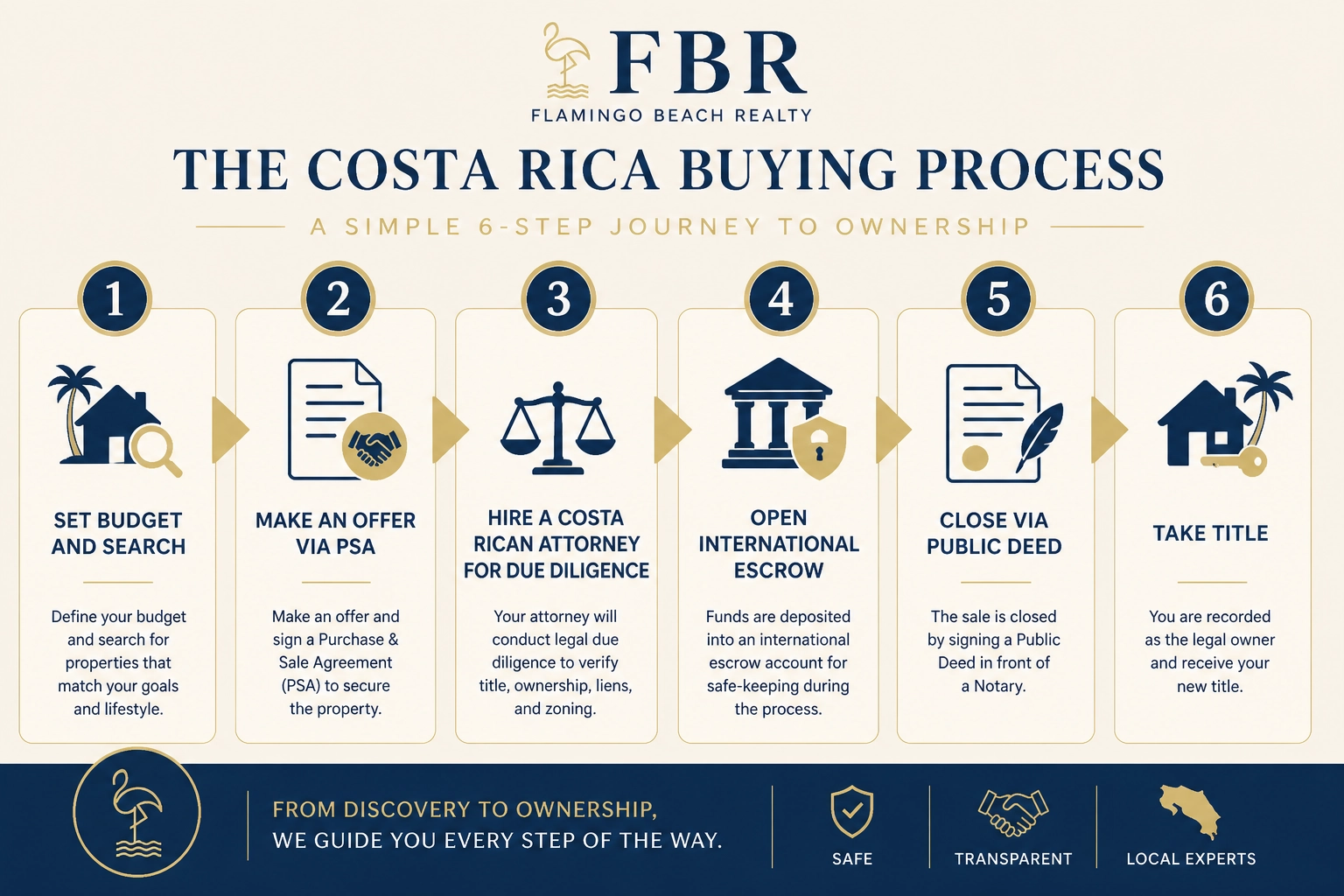
The buying process runs in six stages: define budget and search, make an offer via Purchase & Sale Agreement (PSA), hire a Costa Rican attorney for due diligence, open international escrow, close via public deed before a licensed Notary, and take title. Normal timeline from accepted offer to title transfer: 30 days. With bank financing: 45–60 days. A Costa Rican attorney is legally required for the title transfer.
Step 1 — Define your criteria and total budget
Before touring properties, know your real number. That number includes the purchase price plus closing costs (3.5–5%), annual property taxes (0.25%), HOA or maintenance fees if buying in a gated community, and furnishing or renovation if needed. All luxury real estate transactions in Guanacaste are priced and closed in US dollars.
Step 2 — Work with a licensed local agent
Costa Rica does not license real estate agents at the national level the way the US and Canada do, which means anyone can call themselves an agent. This is exactly why choosing carefully matters. Look for someone with a deep, verifiable track record in the specific community you’re considering — not a generalist covering the whole country. Look for an agent who is registered with SUGEF, the money laundering division of the Costa Rican government. Your agent should have a trusted independent attorney network, and be willing to give you an honest pricing opinion, including telling you when a property is overpriced.
Step 3 — Submit a Purchase & Sale Agreement (PSA)
Once you’ve identified a property, your agent prepares a Purchase & Sale Agreement (PSA). This document establishes price, terms, and the due diligence period. It typically includes a good-faith deposit (10% of the purchase price) held in escrow, refundable if due diligence reveals a disqualifying issue.
Step 4 — Hire a Costa Rican attorney (independent from your agent)
This is the step that protects you. Your real estate agent represents you in the transaction. Your attorney protects you from problems within the transaction. They are different roles requiring different people. Your attorney conducts full due diligence: title search back 30+ years, survey verification, lien searches, environmental restrictions, municipal permits, HOA status, and any legal encumbrances on the property. In Costa Rica, title insurance is available but not standard — thorough due diligence by a qualified attorney is your primary protection.
Step 5 — Open international escrow
Funds are held by an established escrow company (Stewart Title, TLA, or reputable local alternatives) rather than by your attorney or agent. Never wire funds directly to a seller or agent. Escrow protects both parties and is the accepted standard in the market.
Step 6 — Close at the National Registry
Closing in Costa Rica is executed via a public deed (escritura) prepared and signed before a Costa Rican Notary Public — who in Costa Rica is a licensed attorney, not simply a notary. A Costa Rican attorney is legally required to execute the transfer; this cannot be done by a foreign attorney or without this step. The deed is registered with the National Registry (Registro Público), and title officially transfers upon registration. Under normal conditions, this process completes within 30 days of the accepted offer. With bank financing involved, allow 45–60 days.
→ Related: Costa Rica Real Estate Due Diligence: A Step-by-Step Checklist (Guide #6)
Question 03
What are the closing costs, taxes, and fees when buying in Costa Rica?
Direct Answer
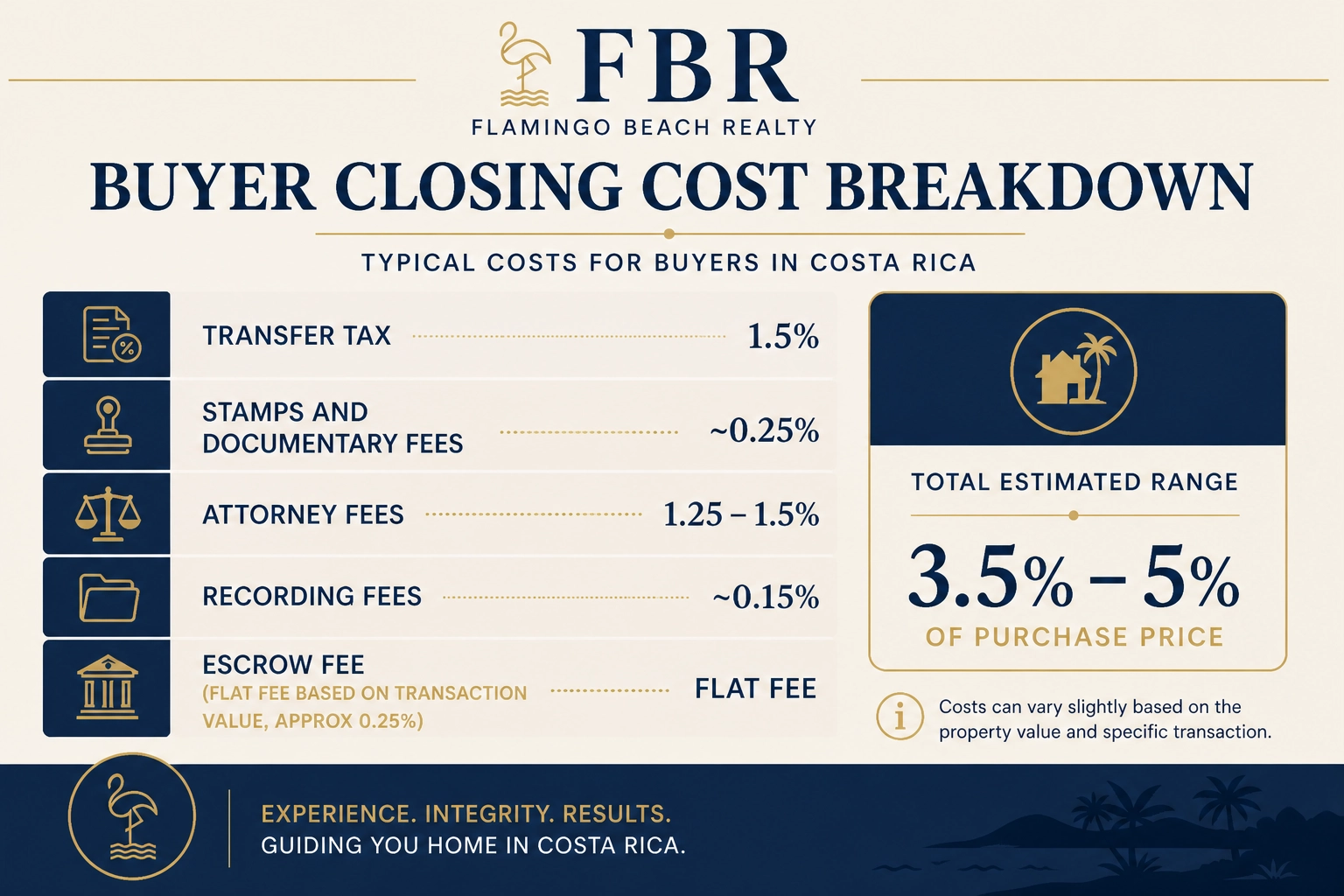
Plan for total closing costs of 3.5–5% of the purchase price, in addition to the property price. The buyer typically pays: transfer tax (1.5%), registry and documentary fees (~0.80%), and attorney fees (1.25–1.5%). Annual property tax is just 0.25% of registered value — one of the lowest in Latin America.
One-time costs at closing — buyer side
- Transfer tax (Impuesto de Traspaso): 1.5% of the registered transfer value
- Registry and documentary fees: approximately 0.80% of the purchase price. Covers National Archive stamps, Bar Association stamps, court stamps, and National Registry recording fees.
- Attorney fees: 1.25–1.5% of the purchase price, regulated by the Costa Rican Bar Association and generally not negotiable below the minimum
- Escrow fee: varies by escrow company; typically $1,500–$3,500 flat or a small percentage of the transaction value
One-time costs at closing — seller side (for reference)
- Capital gains tax: 15% of net gain on the sale, introduced in 2019. Properties registered before July 1, 2019, may be treated differently — consult your attorney.
- Agent commission: typically 6% of the sale price, standard across Guanacaste
Ongoing annual costs as a property owner
- Property tax (Impuesto Sobre Bienes Inmuebles): 0.25% of the declared property value, paid quarterly to the local municipality
- Luxury Solidarity Tax (Impuesto Solidario): an additional annual tax on properties with a construction value above approximately $300,000. Rate is graduated from 0.25%–0.55% depending on assessed value, applied to the construction value, not the land.
- HOA / maintenance fees: vary significantly by community. In Reserva Conchal, fees can run $200–$1,500+/month. In smaller or less-amenitized communities, $150–$300/month is more typical. Always request the current HOA budget and reserve fund status before making an offer.
- Property management: if using your home as a vacation rental or maintaining it while absent, budget 20% of rental revenue plus a small flat monthly fee.
One point I make with every buyer: the registered transfer value on the deed is occasionally set below the actual sale price in some transactions — a legacy practice in Costa Rica. This creates complications at resale and with mortgage financing. At Flamingo Beach Realty, we advise registering at actual value. Your attorney will walk you through current norms and any risks.
Question 04
What is the difference between fee-simple and concession property in Costa Rica?
Direct Answer
Fee-simple is full private title registered with the National Registry — you own the land outright. Concession is a government-granted right to use land within the Maritime Zone (first 200 meters from mean high tide line). This is a lease from the government, not ownership. Foreigners cannot hold concessions in the first 50 meters, and may hold up to 49% of a concession entity in the Restricted Zone (50–200 meters). Always verify title type before making any offer on beachfront property.
This distinction is the most important — and most frequently misunderstood — aspect of buying real estate in Costa Rica. Getting it wrong can mean paying a premium for a property with significant legal restrictions you weren’t warned about, or worse, purchasing something you’re not legally permitted to hold in the way you expected.
Fee-simple title
Fee-simple (pleno dominio) is the equivalent of freehold ownership in common-law countries. The title is registered in the National Registry in your name or your corporation’s name. You can sell it, mortgage it, pass it to heirs, and use it as zoning allows. Most properties in the interior and established Gold Coast communities — Playa Flamingo, Mar Vista, Las Catalinas, Hacienda Pinilla — are fee-simple.
The Maritime Zone and concession land
Costa Rica’s Maritime Zone Law (Ley 6043) establishes that the first 200 meters from the ordinary high tide line is government-regulated land. It is divided into two zones:
- Public Zone (first 50 meters from high tide line): Cannot be sold, titled, or conceded. This belongs to the state. No private ownership of any kind is permitted in this strip.
- Restricted Zone (50–200 meters from high tide line): May be subject to a concession — a government license to use the land for a defined period, typically 20 years and renewable. This is a lease, not ownership. The land remains government property.
Foreign ownership rules in the Restricted Zone
Foreigners may not directly hold a concession. They can own up to 49% of a Costa Rican corporation that holds the concession — the remaining 51%+ must be held by Costa Rican nationals or qualifying entities. This rule is enforced and periodically audited. If you are looking at a beachfront property with an attractive price, verifying the title type is the first question your attorney should answer before any financial commitment is made.
What to verify before making any beachfront offer
- Is the property fee-simple or concession?
- If concession: when does it expire, and what is the renewal status?
- What percentage of the concession-holding entity is currently held by foreign nationals?
- Have all structures and improvements been approved by the municipality?
- Are there any pending concession violations or regulatory actions?
→ Related: Fee Simple vs. Concession Property in Costa Rica: What Every Buyer Must Know (Guide #3)
Question 05
Which Guanacaste community should I buy in, and how do I choose the right agent?
Direct Answer
Community choice comes down to three factors: full-time vs. vacation use, beach vs. golf as your primary lifestyle, and proximity to services and infrastructure. Each Gold Coast community serves a distinct buyer profile. For your agent: look for verifiable closed-transaction history specifically in the community you’re targeting, full bilingual service, an independent attorney network, and a willingness to give honest pricing guidance — not just what sellers want to hear.
Guanacaste is not one market. Price per square foot, HOA structure, resale liquidity, and community culture differ meaningfully from one community to the next. Here is an honest breakdown of each.
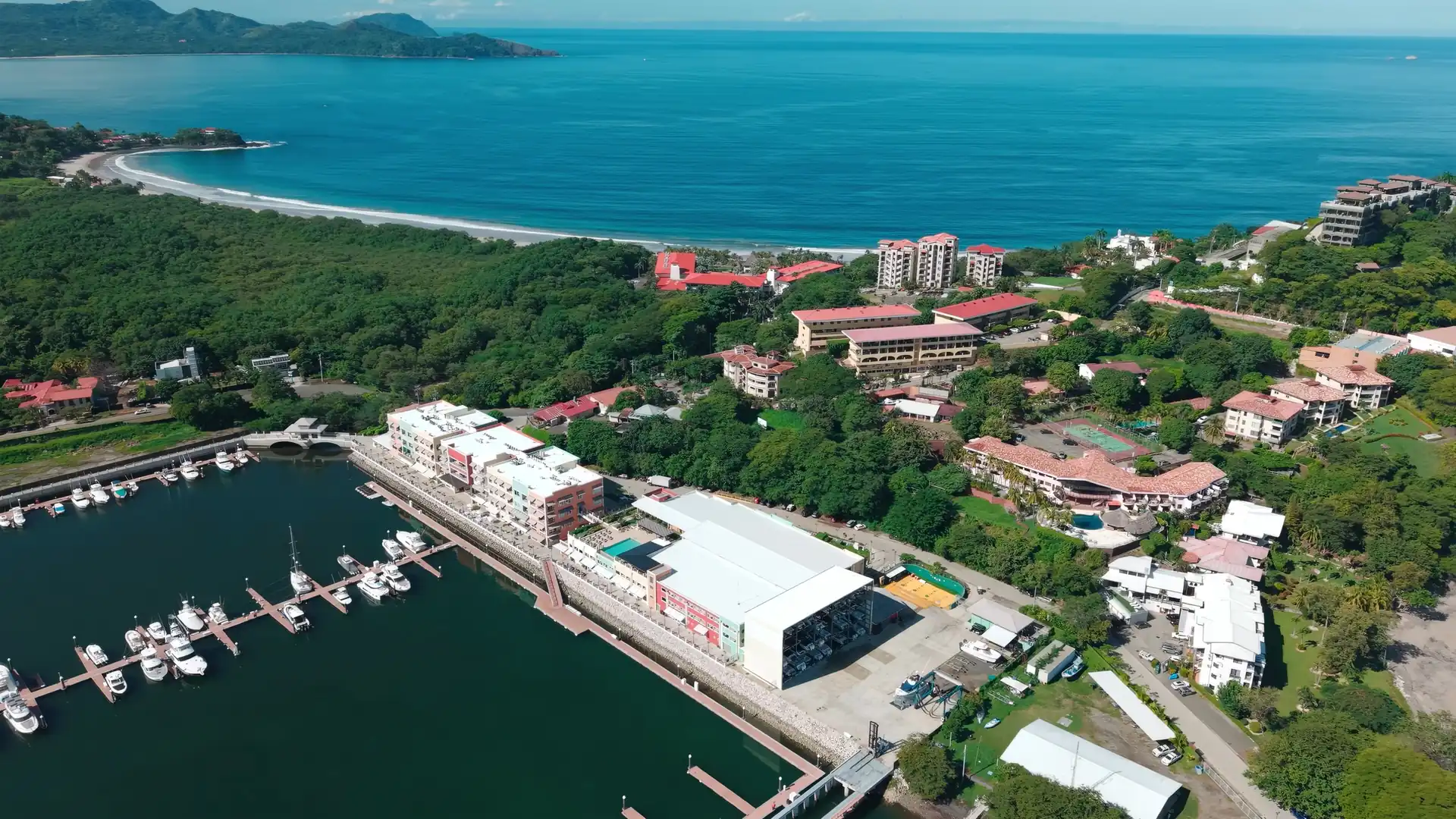
Playa Flamingo and Potrero
The original luxury beach community in northern Guanacaste. Direct beach access, established local community, a full-service marina, and excellent fishing and boating. The market ranges from oceanfront villas to condos with beach club access. No resort gate — more of an authentic coastal town with infrastructure. Best for buyers who want genuine beach living with services, not a resort bubble.
→ Related: Living in Playa Flamingo — Lifestyle, Real Estate & Community Guide (Guide #8)
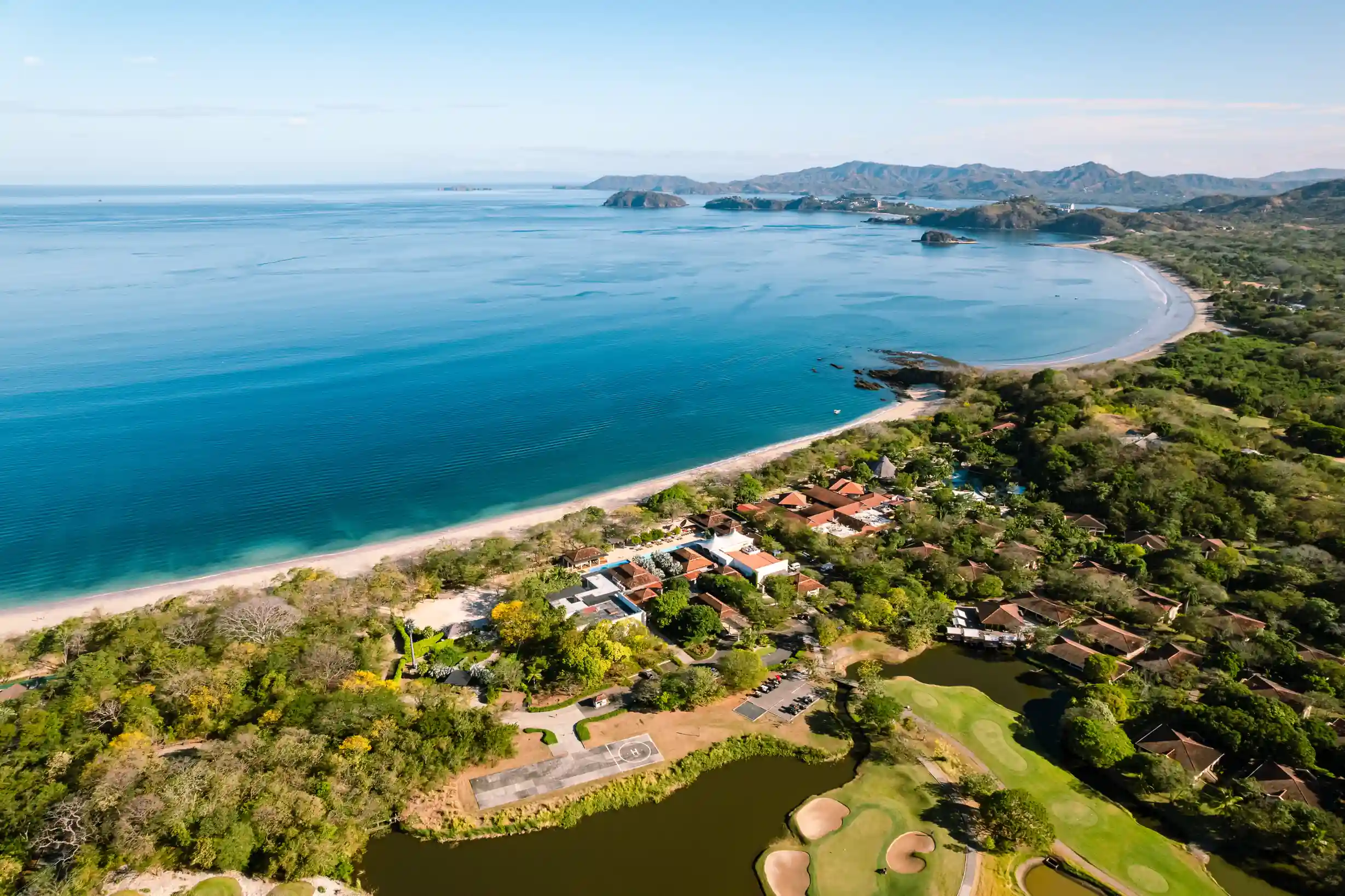
Reserva Conchal
The most amenity-rich community on the Gold Coast. A gated resort with a W Hotel, 18-hole championship golf, tennis, beach club, restaurants, and on-site property management. Prices run above comparable square footage elsewhere — you’re paying for the infrastructure and brand positioning. Best for families and buyers who want a managed resort lifestyle with strong vacation rental income potential.
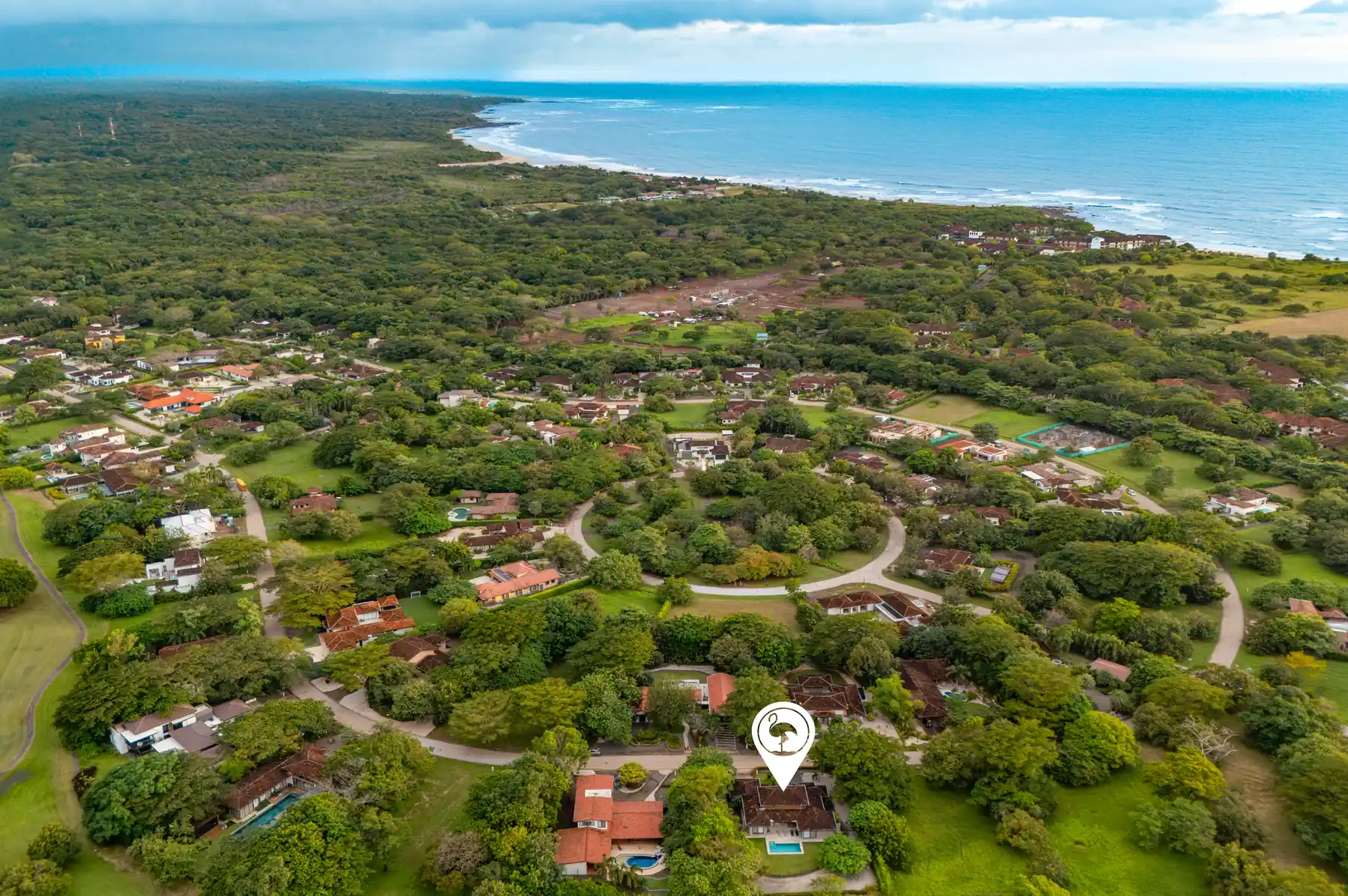
Hacienda Pinilla
A 4,500-acre private reserve with 10+ kilometers of beaches, multiple golf courses, an equestrian center, and a wide range of property types from condos to custom homesites. More of an active outdoors community — quieter than Conchal, without the resort packaging. Attracts buyers who want privacy, nature, and activity.
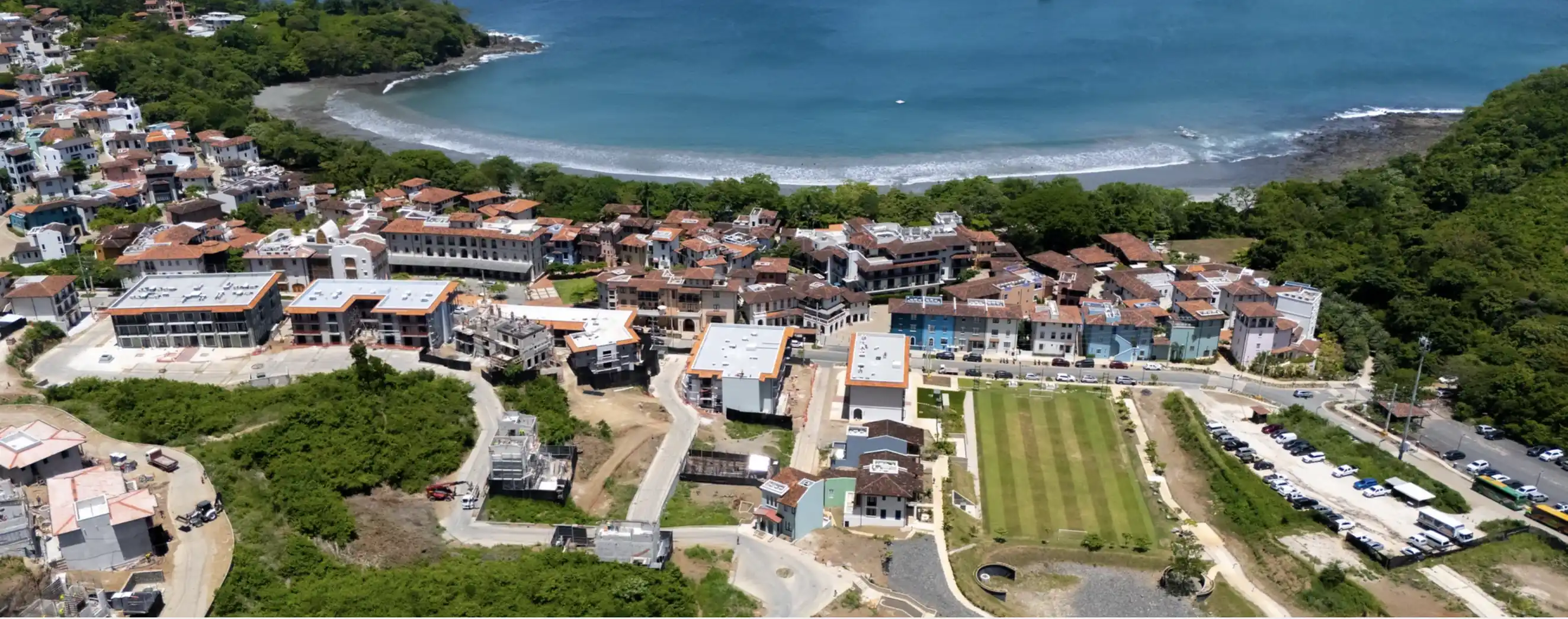
Las Catalinas
A car-free walkable village built around pedestrian streets, a town beach, and an intentional community culture. Unlike anything else in Costa Rica. Attracts design-forward buyers who value walkability and architecture over HOA amenities. The resale market is unique — high demand from a specific and loyal buyer type.
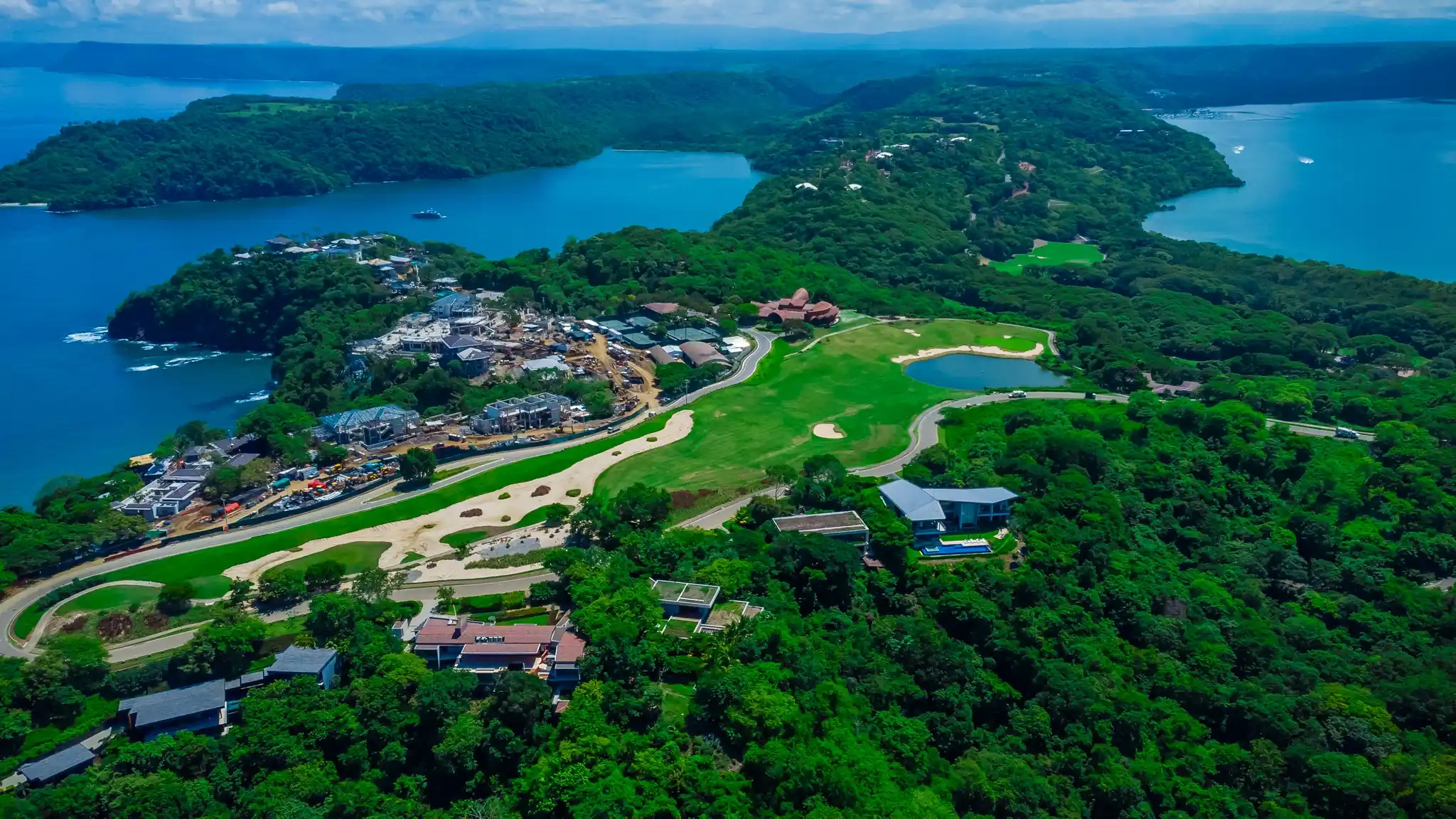
Peninsula Papagayo
The ultra-luxury tier. International brands including Four Seasons and Andaz. Marina access, branded residences, and private beaches. The highest price per square foot in Costa Rica. Buyers here are typically acquiring a flagship asset, not a primary residence.
How to choose the right real estate agent in Costa Rica
The single most important criterion: proven transaction history in the specific community you’re targeting. Without national licensing, the barrier to entry is essentially zero. What separates the right agent:

- Can show verifiable recent closings — specific transactions, addresses, and sales prices — in the community you want to buy in
- Full bilingual service — fluent enough to draft, negotiate, and explain legal documents accurately
- An independent attorney network — your agent and your attorney should not have a financial referral relationship that aligns their interests
- Honest pricing discipline — including telling you when a property is overpriced, and why
- Market experience through at least one correction — they understand how the market moves in both directions
And equally important: chemistry and communication style. This process takes 30–60+ days from first conversation to closing. You will make major financial decisions based on this person’s guidance. The relationship needs to work.
Ready to buy property in Costa Rica?
Talk directly with Melanie Engel, principal broker and founder of Flamingo Beach Realty — 500+ five-star reviews, $900M+ in closed transactions across Guanacaste's Gold Coast.
flamingobeachrealty.com/contactBook a free 30-minute consultation with Melanie or one of our team's specialists.