

For many people moving to Costa Rica from Florida, Texas, or other parts of North America, seeing a large lizard crossing the garden or resting on a roof can be an unfamiliar experience. In Guanacaste, encounters with iguanas and garrobos are part of living alongside the region’s native wildlife.
Understanding which species you are seeing, why they visit residential properties, and how to manage your home around them can help you make informed decisions as a homeowner. Costa Rica protects its wildlife under national law, so the approach is different from what some buyers may be accustomed to.
Table of Contents
- Iguanas and Garrobos: How to Tell Them Apart
- Why Garrobos Thrive in Guanacaste
- Why They Visit Homes and Gardens
- Wildlife Protection and What Homeowners Can Do
- Practical Ways to Manage Your Property
- Frequently Asked Questions
1. Iguanas and Garrobos: How to Tell Them Apart
Two species are commonly seen across Guanacaste: the green iguana (Iguana iguana) and the black spiny-tailed iguana, commonly called the garrobo (Ctenosaura similis). Although they belong to the same family, they differ in appearance, habitat, and diet.
The green iguana is generally larger and green, although brown and orange tones can appear depending on the season. It occurs on both the Pacific and Caribbean slopes and is associated with rivers, streams, and other areas near water. Its diet consists of plant material, including leaves, flowers, and fruit.
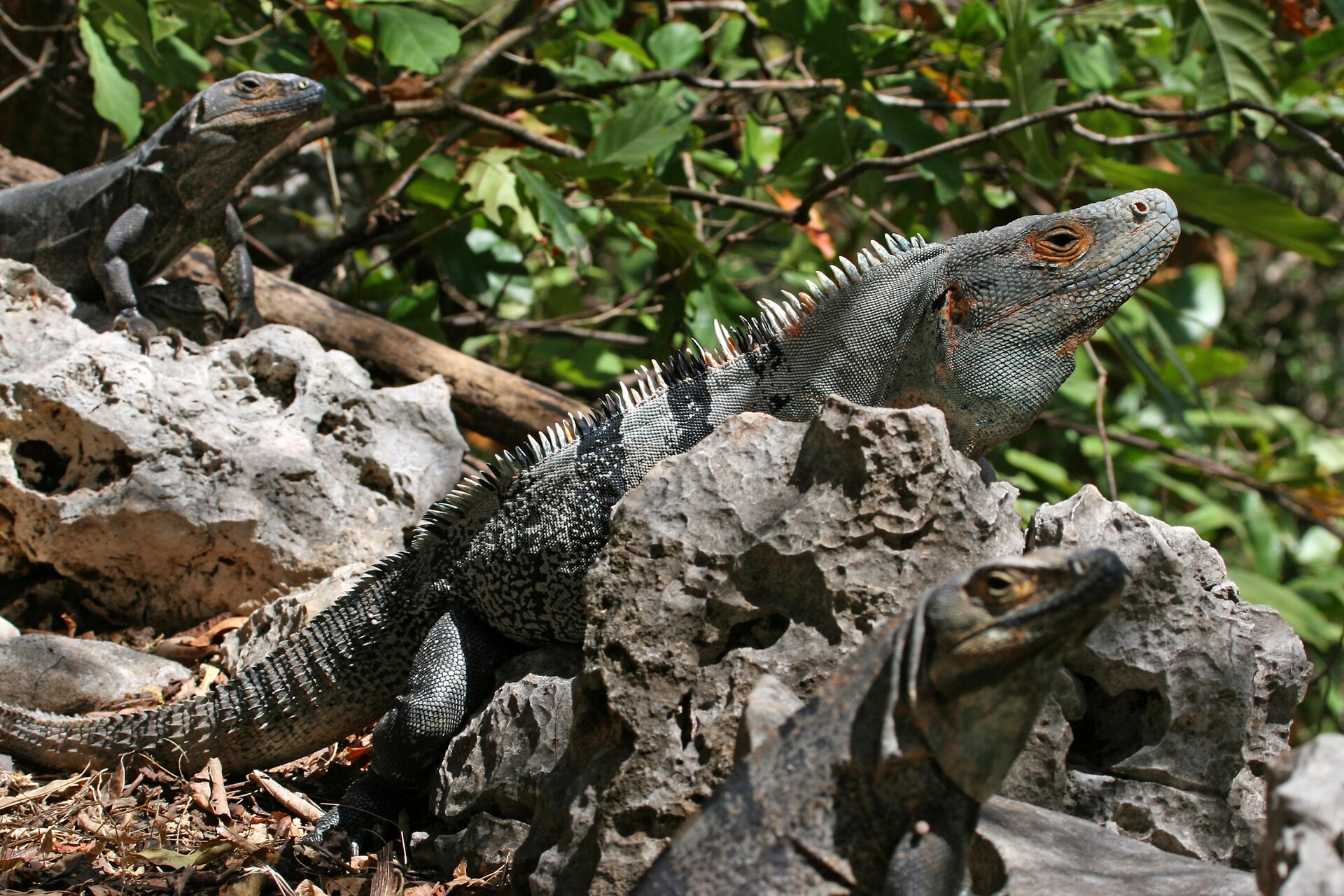
Photo: Christian Mehlführer, CC BY 2.5, via Wikimedia Commons
The garrobo is typically gray or brown, with distinctive spiny scales along its tail. It lives on Costa Rica’s Pacific slope, including Guanacaste, and eats a broader range of food. In addition to plant material, its diet can include insects and small animals.
One detail often surprises homeowners: young green iguanas and young garrobos can both be bright green. Color alone is not always enough to identify the species.
2. Why Garrobos Thrive in Guanacaste
Guanacaste’s tropical dry forest provides suitable habitat for garrobos. They use trees and elevated branches for shelter and feeding, while burrows and spaces beneath rocks, roots, and fallen logs provide places to hide.
Their digging can become noticeable around homes, particularly in garden beds, banks, and areas with loose soil. Burrows are also part of the local ecosystem and may provide shelter for other wildlife.
Landscaping can influence how often these reptiles visit a property. Garrobos eat leaves, fruit, and flowers, including blossoms from some trees that are common in the region’s dry-season landscape. A garden with abundant food and sheltered spaces may attract more wildlife than a more open lot.
For homeowners, the goal is not to eliminate the natural habitat around the property. It is to understand how the landscaping, roofline, and surrounding environment affect interactions with wildlife.
3. Why They Visit Homes and Gardens
Iguanas and garrobos can adapt to residential areas, where gardens, trees, vacant lots, and rooftops offer shelter and food. Costa Rica’s wildlife authorities identify several practical factors that can encourage them to stay near buildings.
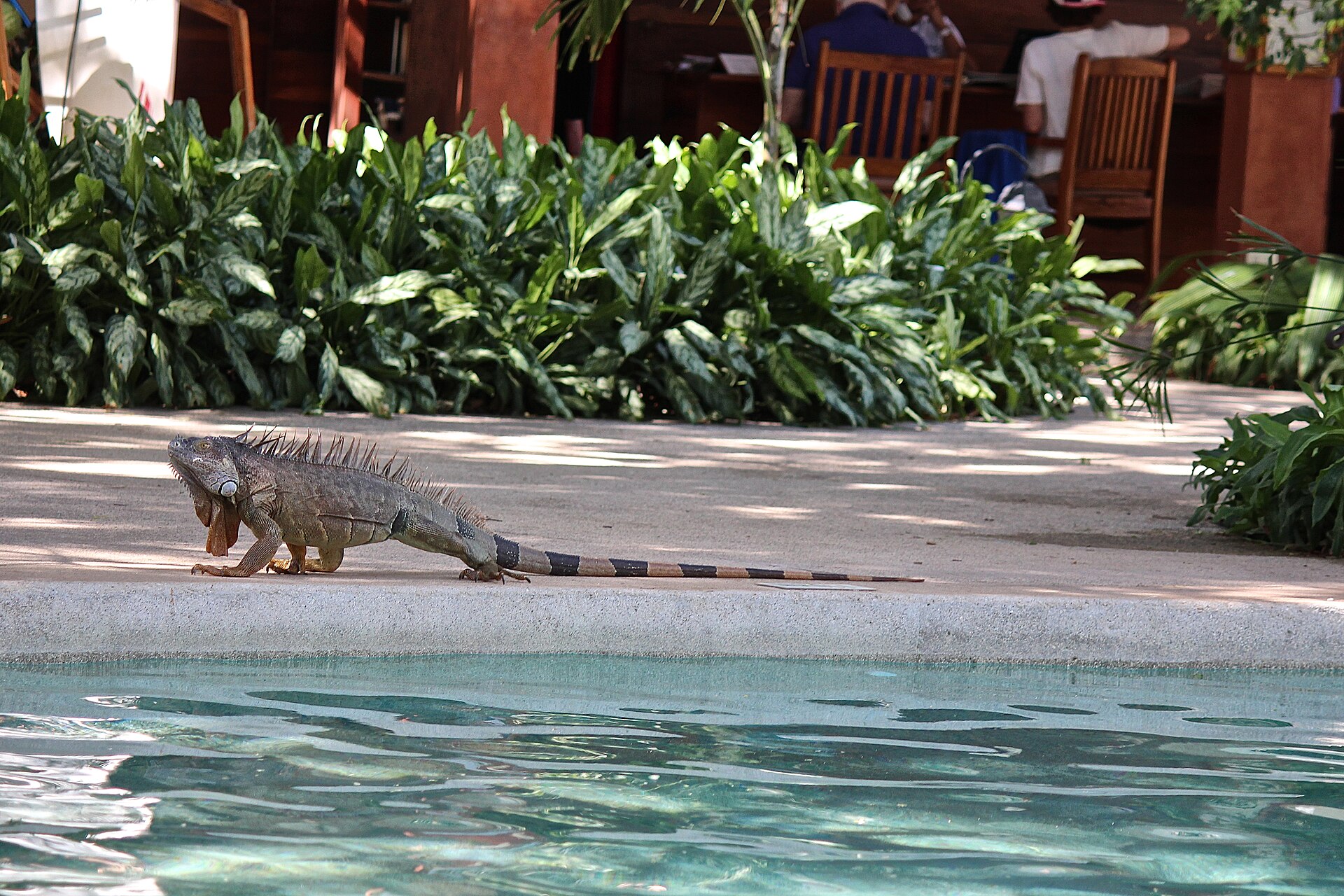
Photo: Bob Henricks, CC BY-SA 2.0, via Wikimedia Commons
Trees and Roof Access
Branches that touch a roof or wall can provide a route onto a building. Openings beneath roof tiles, gaps in ceilings, and other sheltered cavities may then become places to hide.
Food and Organic Waste
Fallen fruit, exposed compost, uncovered bins, and accessible food waste can attract wildlife and make a garden more appealing as a regular feeding area.
Water and Natural Habitat
Green iguanas are particularly associated with areas near water. Properties close to streams, rivers, or coastal vegetation may offer suitable conditions for wildlife.
These factors are useful to consider when viewing a property. A reptile seen in the garden is not necessarily a sign of a problem, but the surrounding conditions can help explain why it is there and whether simple maintenance changes could reduce unwanted encounters.
4. Wildlife Protection and What Homeowners Can Do
Costa Rica’s Wildlife Conservation Law, Ley de Conservación de Vida Silvestre No. 7317, protects native wildlife. Official guidance from Costa Rica Silvestre advises residents not to kill, capture, relocate, keep, or feed iguanas and garrobos.
This is an important difference for buyers who are used to rules in places such as Florida, where green iguanas are considered an invasive species. Local rules and wildlife classifications do not transfer from one country to another.
For an ordinary encounter on your property, the recommended approach is to leave the animal alone if it is in a safe location. If one enters a building, the official guidance recommends opening doors or other exits and encouraging it to leave on its own rather than attempting to handle it.
Contact the appropriate wildlife authorities if an animal appears injured or sick, is trapped without a way out, has been hit by a vehicle or electrocuted, or has been attacked by a domestic animal. Avoid hiring someone to capture or relocate wildlife without confirming that the person is properly authorized to carry out the work.
5. Practical Ways to Manage Your Property
The most useful steps focus on reducing access to buildings and limiting easy food sources, rather than trying to remove wildlife from the property.
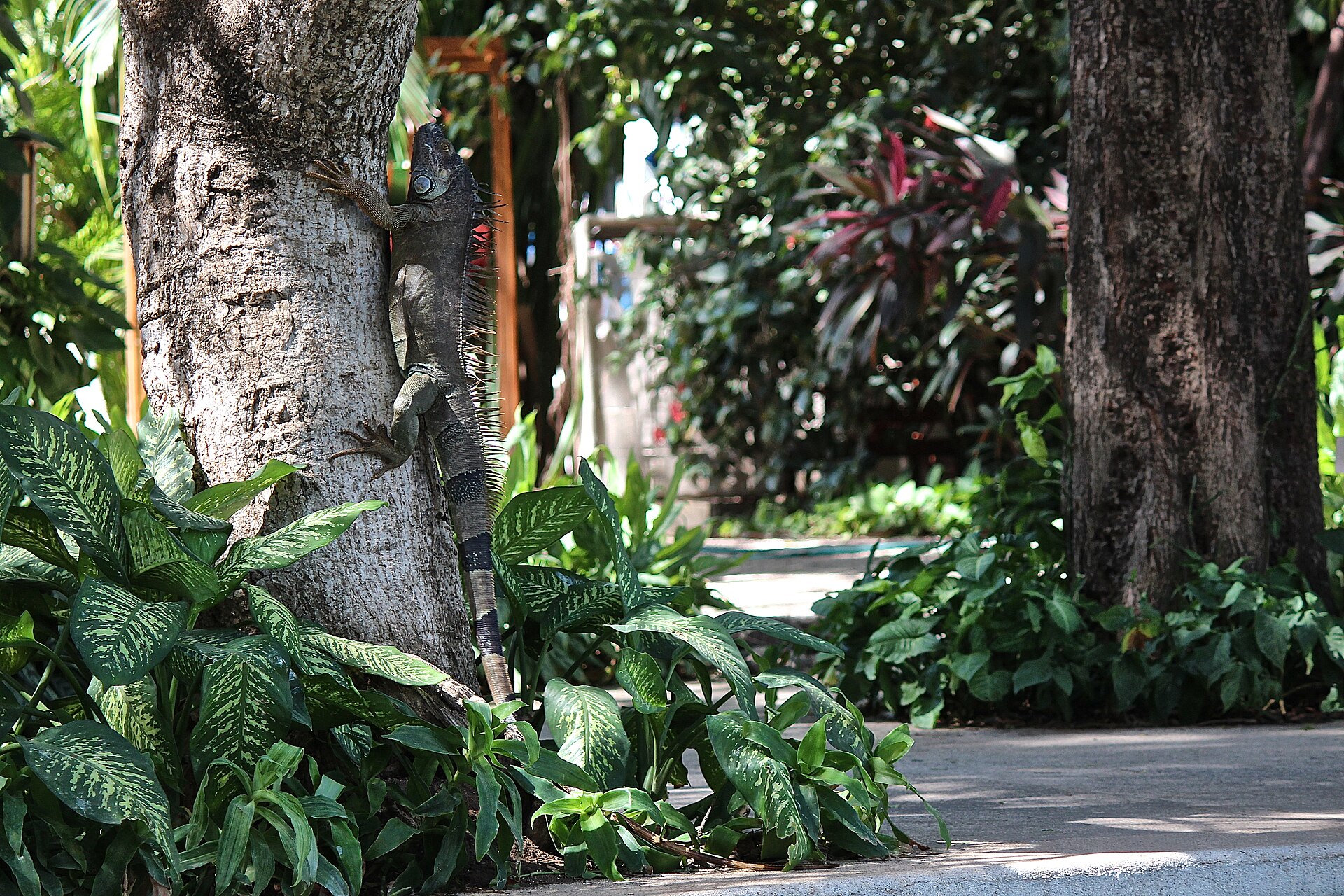
Photo: Bob Henricks, CC BY-SA 2.0, via Wikimedia Commons
Maintain the Roofline
Check for openings around roof tiles, ceilings, and other sheltered spaces. Before sealing a cavity, make sure no animal is trapped inside.
Trim Branches Near the House
Prune trees and shrubs that touch roofs or walls to reduce access to the building.
Manage Fruit and Waste
Pick up fallen fruit, secure rubbish bins, and prevent wildlife from accessing compost or food scraps. Never feed wild animals.
Teach Children and Guests to Keep Their Distance
Iguanas and garrobos can defend themselves with their tails, claws, and teeth if cornered or handled. Observe them from a safe distance and do not attempt to pick them up.
These recommendations align with Costa Rica Silvestre’s guidance for living alongside iguanas and garrobos.
Landscaping is another consideration when choosing a home. Mature trees, flowering plants, and tropical gardens contribute to the character of Guanacaste properties, but they also require thoughtful maintenance. Our guides to gardening in Costa Rica and keeping a garden free of unwanted visitors offer additional ideas for caring for outdoor spaces.
During a property viewing, look at where branches meet the roof, whether the roofline appears properly sealed, and whether the lot borders a stream or other natural habitat. A home inspection in Costa Rica can confirm whether the roofline is sound.
For buyers exploring communities such as Playa Potrero or considering life in Playa Flamingo, local guidance can help you evaluate the home alongside the practical details of living in a tropical environment.
Frequently Asked Questions About Iguanas in Costa Rica
Can I remove or kill an iguana on my property in Costa Rica?
Do not attempt to kill, capture, or relocate an iguana or garrobo yourself. Costa Rica Silvestre’s official guidance identifies these actions as prohibited under the wildlife protection framework. If an animal presents a genuine problem or is in distress, contact the appropriate authorities for guidance.
What is the difference between an iguana and a garrobo?
Green iguanas are generally larger, green, and herbivorous. Garrobos are usually gray or brown, have spiny scales along their tails, and eat both plant and animal material. Juveniles of both species may be bright green.
Can iguanas or garrobos damage a house?
They can contribute to maintenance issues. Animals may use gaps in rooflines or ceilings as shelter, and their droppings can affect building surfaces. Garrobos may also dig burrows in garden beds or banks. Maintaining the roofline and managing access points can help reduce these issues.
How do they get onto roofs?
Branches that touch roofs or walls can provide a route onto buildings. Trimming these branches and sealing suitable entry points can help limit access. Check that no animal is inside before closing any opening.
Are iguanas and garrobos dangerous to children or pets?
They generally avoid people, but they may defend themselves if approached, cornered, or handled. Their tails, claws, and teeth can cause injuries. Children and pets should be kept at a safe distance, and the animals should not be touched.
Should I reconsider buying a property if I see a burrow?
Not necessarily. A burrow can be a sign of wildlife habitat, which is common in Guanacaste. Consider its location, the condition of nearby landscaping, and whether there are any practical maintenance concerns. If you have specific questions about a burrow or possible structural effects, seek an appropriate local assessment rather than trying to disturb it.
Living Alongside Guanacaste’s Wildlife
Living in Guanacaste means sharing the landscape with a wide range of native wildlife. With thoughtful property maintenance and an understanding of local protections, homeowners can manage everyday encounters while respecting the natural environment.
The team at Flamingo Beach Realty brings decades of local experience to help buyers find the right property in Guanacaste. Contact us today to start your Costa Rica real estate journey.