The Costa Rica real estate buying process is logical and well-established — but it works differently from the US system in ways that matter. If you go in expecting a 30-day close with a title insurance company and a standard buyer’s agent commission split, you’ll be surprised. This guide walks through everything: the escrow process, what your real estate attorney actually does and costs, HOA fees in gated communities, property insurance, building options, and what ongoing property management looks like in Guanacaste.
Table of Contents
- How the Costa Rica Real Estate Buying Process Works
- The Escrow Process in Costa Rica
- Costa Rica Real Estate Attorney Fees
- HOA Fees in Gated Communities
- Costa Rica Property Insurance
- Building a House in Costa Rica
- Property Management in Guanacaste
- Frequently Asked Questions About Buying Property in Costa Rica
How the Costa Rica Real Estate Buying Process Works
Unlike the US, Costa Rica does not have a state-regulated real estate licensing system. There is no MLS, no required escrow company, and no standard closing timeline. What Costa Rica does have is a legal system that protects buyers through the real estate attorney — a critical role that is far more central to transactions here than in the US.
Here’s the basic transaction flow:
Step 1 — Offer and accepted price. Buyer and seller agree on price, terms, and any contingencies (usually financing, due diligence, title verification).
Step 2 — Preliminary contract (Promesa de Compraventa). A written preliminary contract is drafted, signed, and often accompanied by a deposit of 5–10% held in escrow. This binds both parties to the transaction.
Step 3 — Due diligence. The buyer’s attorney verifies title at the National Registry (Registro Nacional), confirms there are no liens or encumbrances, reviews HOA status (if applicable), checks for any property tax arrears, and reviews the survey (plano catastrado).
Step 4 — Final deed (Escritura de Traspaso). If all due diligence is clean, both parties sign the transfer deed before a notary (who is typically also the real estate attorney). The deed is then registered with the National Registry.
Step 5 — Closing costs paid. Total closing costs (approximately 3–4% of purchase price) are split between buyer and seller by custom, though this is negotiable. The breakdown includes transfer tax (~1.5%), legal fees, stamps, and registration fees.
Timeline: From accepted offer to closing typically takes 60–120 days in Costa Rica — longer than US buyers expect. Title registration alone takes several weeks after the deed is signed.
The Escrow Process in Costa Rica Real Estate

The escrow process in Costa Rica real estate exists to protect both parties during the period between the preliminary contract and closing. It’s simpler than the US escrow system but no less important.
Who holds escrow funds? Unlike the US, there’s no licensed escrow company industry in Costa Rica. Escrow funds are typically held by one of three parties:
- The buyer’s or seller’s real estate attorney (most common for smaller transactions)
- A Costa Rican bank in a designated escrow account
- A licensed US escrow company with international operations (becoming more common for transactions involving US buyers)
For transactions above $200,000, many buyers and real estate professionals recommend using a reputable international escrow company or a Costa Rican bank escrow account rather than an attorney’s trust account. It adds a layer of institutional protection and is increasingly the standard for larger deals.
What escrow covers:
- Holding the initial deposit (5–10%) after preliminary contract signing
- Securing the balance of the purchase price until closing conditions are met
- Releasing funds to the seller only upon successful title transfer and registration confirmation
Wire transfer protocols: Costa Rica transactions are dollar-denominated and almost always completed via wire transfer. Buyers should verify wire instructions directly with their attorney before any transfer and use verbal confirmation as an anti-fraud step — wire fraud targeting real estate transactions is a global problem.
Costa Rica Real Estate Attorney Fees
The real estate attorney in Costa Rica is not just a closer — they are the central legal authority for the entire transaction. The attorney drafts the preliminary contract, conducts due diligence at the National Registry, drafts and notarizes the transfer deed, submits the deed for registration, and manages the closing process from start to finish.
Standard attorney fee structure: Costa Rican attorneys typically charge a percentage of the transaction value based on a sliding scale set by the Colegio de Abogados (the national bar association). Standard fees are:
- 1.25% on the first $100,000 of transaction value
- 1.0% on the next $400,000
- 0.75% on values above $500,000
For a $400,000 property, attorney fees under this schedule would be approximately $4,250. For a $700,000 property, approximately $6,250. These are minimums — some attorneys charge more, particularly for complex transactions.
Additional costs typically included in closing:
- Transfer tax: ~1.5% of the higher of the purchase price or registered value
- Documentary stamps: relatively minor, under $500 for most transactions
- National Registry fees: $200–$500
- Notary fees: often bundled into the attorney’s fee
Total closing cost estimate: Budget 3–4% of the purchase price as a combined closing cost figure. This is split by custom between buyer and seller, though the exact split should be negotiated in the preliminary contract.
Hiring the right attorney: Your real estate attorney should be bilingual (English-Spanish), experienced in property transactions, and ideally referred by a trusted source. Flamingo Beach Realty works with several reputable bilingual attorneys in the Guanacaste region and can provide referrals as part of the buying process.
HOA Fees in Gated Communities
Most desirable properties in Guanacaste — especially those within 30 minutes of the beach — are part of a gated community (condominio). HOA fees pay for security, road maintenance, common area landscaping, pool and recreational facilities, and community administration.
Typical HOA fee ranges in Costa Rica gated communities:
| Community Type | Monthly HOA Range |
|---|---|
| Basic residential gated community | $150–$400/month |
| Mid-range community with pool/amenities | $300–$600/month |
| Premium community (Reserva Conchal, Hacienda Pinilla) | $600–$1,500+/month |
| Luxury resort-integrated community | $1,000–$3,000+/month |
The Costa Rica HOA fees in gated communities are structured under the Ley Reguladora de la Propiedad en Condominio (Condominium Law). The HOA is governed by a board of owners (similar to the US model), and fee collection is mandatory — unpaid HOA fees create a lien on the property that must be settled before any sale.
What HOA fees typically cover:
- 24-hour security and gate access
- Private road maintenance
- Common area landscaping and pool maintenance
- Exterior lighting
- Community water system (in some developments)
- Reserve fund contributions
What they typically don’t cover:
- Individual home insurance
- Interior maintenance
- Individual utility bills
- Property tax
When evaluating a property purchase, always request the HOA budget and financial statements. A healthy HOA has a funded reserve account and a track record of paying maintenance bills on time. An underfunded HOA can lead to special assessments — surprise charges to all owners.
Costa Rica Property Insurance

Property insurance in Costa Rica works similarly to the US — homeowners or condo insurance covers fire, storm damage, theft, and in some cases liability. It’s not legally mandated, but it’s strongly recommended and often required by lenders (if financing).
The INS (Instituto Nacional de Seguros) is the national insurance company and the dominant provider in the market. INS offers property, content, and liability coverage for residential properties. Private insurers also operate in Costa Rica, including several international companies familiar to US buyers.
Typical cost of property insurance: Residential property insurance premiums typically run 0.2–0.5% of the insured value per year. A home insured for $400,000 might cost $800–$2,000/year depending on construction type, location, age of the building, and coverage limits.
Coverage considerations specific to Costa Rica:
- Wind and rain damage: The green season brings significant rainfall. Roof quality and drainage matter. Make sure your policy covers water intrusion.
- Earthquake coverage: Costa Rica sits on the Pacific Ring of Fire and is seismically active. Earthquake coverage is often a separate rider and is worth carrying.
- Contents coverage: Covers furniture, electronics, and personal property inside the home.
- Liability coverage: Important for vacation rental properties — if a guest is injured, liability coverage protects the owner.
For vacation rental properties, verify that your insurance policy covers short-term rental use. Standard residential policies sometimes exclude commercial rental activity.
Building a House in Costa Rica
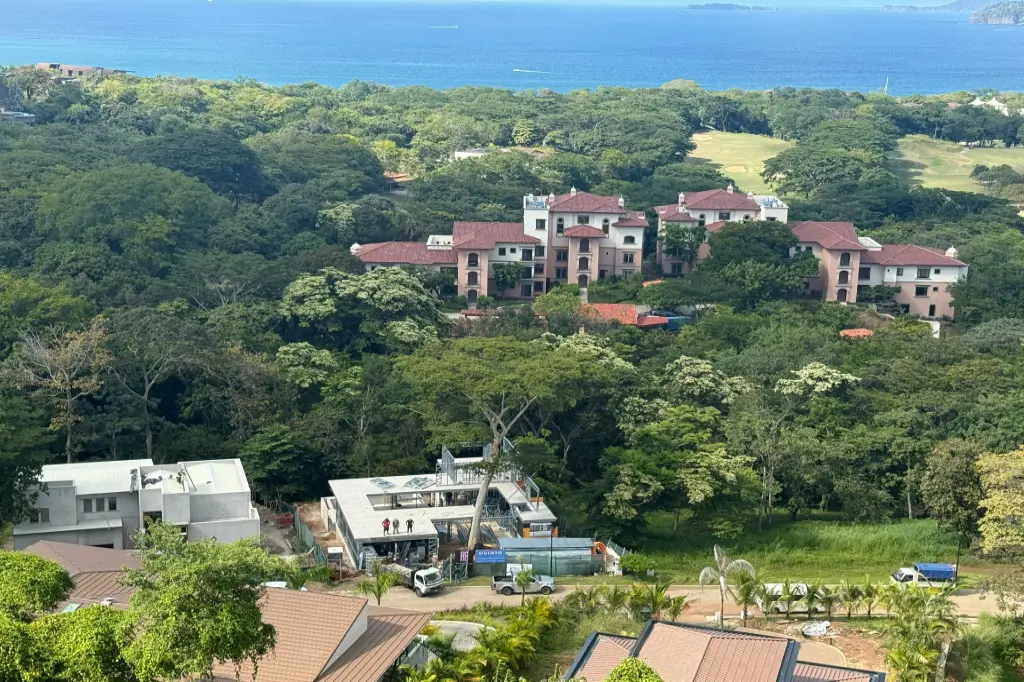
Building a house in Costa Rica is genuinely possible — and some buyers find it more satisfying than purchasing existing inventory, particularly for custom designs or unique lot configurations. But it requires patience, a trusted architect and contractor, and a realistic understanding of how construction timelines work.
The permit process: All construction in Costa Rica requires a building permit (permiso de construcción) issued by the municipality (CFIA). The permit process involves architectural plans, structural engineering certification, and environmental review for properties near waterways or protected areas. Depending on project complexity, permits can take 3–9 months to obtain. Factor this into your timeline — construction cannot legally begin without them.
Estimated construction costs: As a general rule, residential construction in Guanacaste costs $80–$180 per square foot depending on finish quality. Basic construction (tile floors, standard fixtures, no pool) runs $80–$100/sqft. Mid-range construction with good finishes runs $110–$140/sqft. High-end custom homes with premium materials, pools, and smart-home systems reach $150–$180/sqft and above.
Important considerations:
- Use a licensed architect and structural engineer. The CFIA (Colegio Federado de Ingenieros y Arquitectos) licenses professionals in Costa Rica. Your architect must be registered to stamp plans for permitting.
- Hire a reputable local contractor. Word-of-mouth referrals from the expat community and from established local real estate agents are more reliable than advertising alone.
- Budget a contingency. Add 15–20% to your construction budget for unforeseen costs — material price changes, permit delays, scope additions.
- Timeline: A typical custom home takes 18–30 months from permit application to completion.
Property Management in Guanacaste
For buyers who don’t live in Costa Rica full-time, professional property management is essential. A good property manager handles vacation rentals, maintenance, vendor relationships, and emergency response — protecting your investment while you’re not on-site.
Property management in Guanacaste typically costs 15–25% of gross rental income for full-service vacation rental management, or a flat monthly fee ($100–$300/month) for caretaking services on non-rental properties.
What full-service property management includes:
- Short-term rental listing management (Airbnb, VRBO, direct booking)
- Guest communication, check-in, and checkout
- Cleaning and linen service
- Routine maintenance coordination
- Utility payment management
- Monthly reporting and owner disbursements
For non-rental properties (second homes used personally), a caretaker service handles security checks, garden maintenance, pool service, and small repairs. This typically runs $100–$200/month for a basic service package.
The quality of property managers in Guanacaste varies widely. Flamingo Beach Realty can refer trusted property management partners in the Flamingo, Potrero, and Tamarindo corridors who have proven track records with international owners.
Frequently Asked Questions About Buying Property in Costa Rica
How does escrow work in Costa Rica real estate?
Escrow funds (typically 5–10% initial deposit) are held by the real estate attorney, a Costa Rican bank, or an international escrow company during the due diligence period. Funds are released to the seller upon successful title transfer and registration.
What are typical attorney fees for buying property in Costa Rica?
Attorneys typically charge on a sliding scale: approximately 1.25% on the first $100,000 and 1.0% on values up to $500,000. Total closing costs including legal fees, transfer tax, stamps, and registration run approximately 3–4% of the purchase price.
How much are HOA fees in Costa Rica gated communities?
Monthly HOA fees range from $150–$400 for basic communities to $600–$1,500+ for premium resort-integrated gated communities like Reserva Conchal or Hacienda Pinilla.
Do I need property insurance in Costa Rica?
It’s not legally required but strongly recommended. Residential insurance typically costs 0.2–0.5% of the insured value per year. Earthquake coverage is a separate rider worth carrying in a seismically active country.
How much does it cost to build a house in Costa Rica?
Construction in Guanacaste typically runs $80–$180 per square foot depending on finish quality. Budget an additional 15–20% contingency. The permitting process adds 3–9 months before construction can begin.
How long does a Costa Rica real estate transaction take?
From accepted offer to closing typically takes 60–120 days. Title registration after signing can add several additional weeks. Budget 3–4 months for the full transaction timeline.
The team at Flamingo Beach Realty guides buyers through every step of the process — from identifying the right property to connecting you with vetted attorneys, builders, and property managers. Contact us today to get started.